
Description
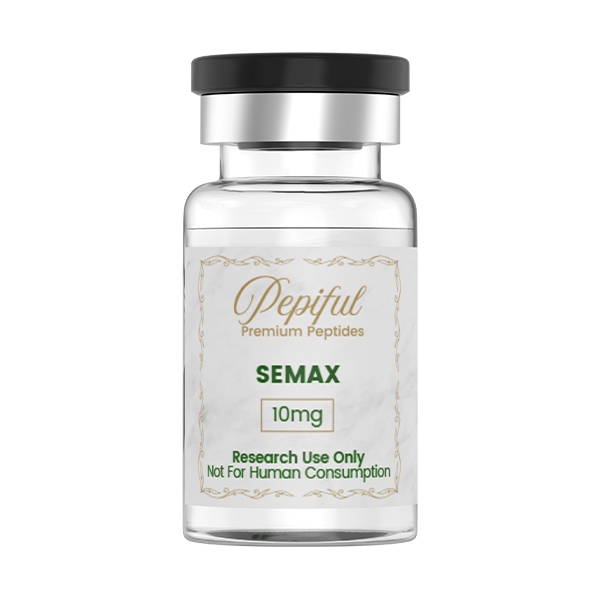
Semax (10mg) — Researcher‑Focused Summary
Synthetic heptapeptide analog of ACTH(4–10): Met–Glu–His–Phe–Arg–Trp–Gly (with N‑terminal acetylation in some formulations).
Developed for neuroprotective, nootropic, and neurorestorative indications; studied in preclinical models and clinical settings (notably Russian clinical research) for stroke, cognitive impairment, and stress‑related disorders.
Key pharmacologic effects
Neuroprotection and neurorestoration: Demonstrates neuroprotective effects in models of ischemia, excitotoxicity, and oxidative stress; reduces infarct size and neuronal apoptosis in rodent stroke models.
Cognitive and memory enhancement: Improves attention, working memory, and learning in animal paradigms and in clinical reports of cognitive impairment and post‑stroke recovery.
Neurotrophic and synaptic modulation: Modulates expression of BDNF, NGF, and other neurotrophic factors; influences synaptic plasticity markers and neuronal survival pathways.
Monoaminergic and peptidergic interactions: Alters catecholaminergic and serotonergic systems, increases dopaminergic tone in some regions, and may affect endogenous peptide signaling related to stress and arousal.
Anti‑oxidative and metabolic effects: Reduces oxidative stress markers and improves mitochondrial/energy metabolism indicators in preclinical studies.
Efficacy (preclinical and clinical highlights)
Preclinical neuroprotection: Consistent reduction in neuronal death, improved histologic and functional outcomes after focal and global ischemia; enhanced recovery in models of traumatic brain injury and neurotoxicity.
Cognitive models: Enhances attention, working memory, and long‑term potentiation; facilitates recovery of cognitive function after stress or injury.
Clinical data: Multiple clinical studies and post‑stroke rehabilitation reports (primarily regional) indicate improved neurological scores, cognitive function, and recovery trajectories after ischemic stroke; randomized, large‑scale placebo‑controlled trials outside these cohorts are limited.
Acute vs chronic effects: Reports support benefit with short‑term acute administration in ischemic settings and with longer‑term use for cognitive symptoms and rehabilitation.
Mechanistic considerations
Neurotrophic signaling: Upregulation of BDNF and NGF and activation of downstream pro‑survival pathways (e.g., MAPK/ERK) implicated in synaptic plasticity and neuronal resilience.
Modulation of monoamines and neuropeptides: Changes in dopamine, norepinephrine, and serotonin turnover in specific brain regions; interaction with endogenous peptide networks may underlie arousal and cognitive effects.
Anti‑inflammatory and anti‑oxidative pathways: Attenuation of pro‑inflammatory cytokine responses and oxidative damage after injury, contributing to neuroprotection.
Indirect receptor targets: Direct high‑affinity receptor binding is not fully defined; effects likely mediated via modulation of intracellular signaling cascades and gene expression profiles.
Pharmacokinetics and delivery
Common administration in studies: Intranasal delivery is widely used clinically and preclinically to target CNS effects; subcutaneous/parenteral routes have also been employed in animal models.
CNS targeting: Intranasal route proposed to enhance central bioavailability and rapid onset; PK/PD characterization in humans remains incomplete.
Gap: Quantitative human PK (absorption, bioavailability, CSF penetration, half‑life, metabolite profile) and dose–response relationships need systematic characterization.
Safety and tolerability
Short‑term safety: Generally well tolerated in reported clinical use with few adverse events; low incidence of sedation or psychomotor impairment reported.
Long‑term safety: Limited large‑scale long‑term safety data; chronic administration safety and immunologic consequences require further evaluation.
Regulatory and quality considerations: Much clinical literature is regionally concentrated; standardized GMP formulations, transparent purity/stability data, and independent replication are necessary for regulatory advancement.
Research gaps and priorities
Large randomized controlled trials: Multicenter, adequately powered RCTs in ischemic stroke recovery, cognitive impairment (including vascular cognitive impairment), and stress‑related cognitive dysfunction to define efficacy, dosing, timing (acute vs rehabilitation), and comparative effectiveness.
PK/PD and CNS delivery studies: Systematic human studies comparing intranasal and parenteral routes, determining bioavailability, CSF/plasma ratios, onset/duration, and metabolite profiling.
Mechanistic elucidation: Define molecular targets and signaling cascades (BDNF/NGF pathways, MAPK/ERK, anti‑oxidative mechanisms) using integrated electrophysiology, imaging, and omics approaches.
Immune and inflammatory profiling: Characterize effects on cytokine responses, microglial activation, and peripheral immune mediators in acute injury and chronic administration contexts.
Biomarkers & patient selection: Develop PD biomarkers (EEG, imaging, neurotrophic factor levels) and stratify populations by stroke subtype, timing of intervention, or baseline neuroinflammatory status to predict responders.
Comparative and combination strategies: Compare with standard neuroprotective/rehabilitation approaches; evaluate combination with thrombolysis/ thrombectomy timing, physiotherapy, cognitive rehabilitation, and other neuromodulatory interventions.
Formulation & manufacturing standardization: Develop GMP intranasal and parenteral formulations with validated stability, purity, and analytical assays.
Practical experimental notes
Endpoints: Use validated neurological scales (e.g., NIHSS, mRS), cognitive batteries (e.g., MoCA, CANTAB), functional recovery measures, and mechanistic readouts (EEG, fMRI, PET).
Dosing and administration: Investigate intranasal delivery parameters (dose, frequency, formulation), include parenteral arms in early‑phase PK/PD work; report excipients, peptide stability, and manufacturing details.
Study design: Combine acute‑phase (neuroprotection) and rehabilitation‑phase (neurorestoration) trials; early‑phase studies should integrate PK/PD and biomarker substudies; subsequent efficacy trials require randomized multicenter designs with adequate power and long‑term follow‑up.
PK/PD sampling: Serial plasma and CSF sampling when feasible; quantify neurotrophic factors and oxidative/inflammatory biomarkers.
Safety monitoring: Monitor neuropsychiatric adverse events, bleeding risk when combined with reperfusion therapies, immune parameters, and potential tolerance with prolonged use.
Statistical considerations: Predefine clinically meaningful improvements (NIHSS/mRS shifts, cognitive effect sizes), power for both symptomatic and mechanistic endpoints, and plan biomarker‑guided subgroup analyses.
Conclusion: Semax has substantial preclinical neuroprotective, neurotrophic, and cognitive efficacy signals and promising clinical reports in stroke recovery and cognitive disorders. Advancement requires rigorous randomized trials (acute and rehabilitation settings), thorough PK/PD and CNS‑delivery characterization, mechanistic molecular clarification, standardized GMP formulations, and comprehensive safety and biomarker development to support translational and regulatory progress.
Disclaimer: FOR RESEARCH PURPOSES ONLY. NOT FOR HUMAN CONSUMPTION.
Reviews
There are no reviews yet.