
Description
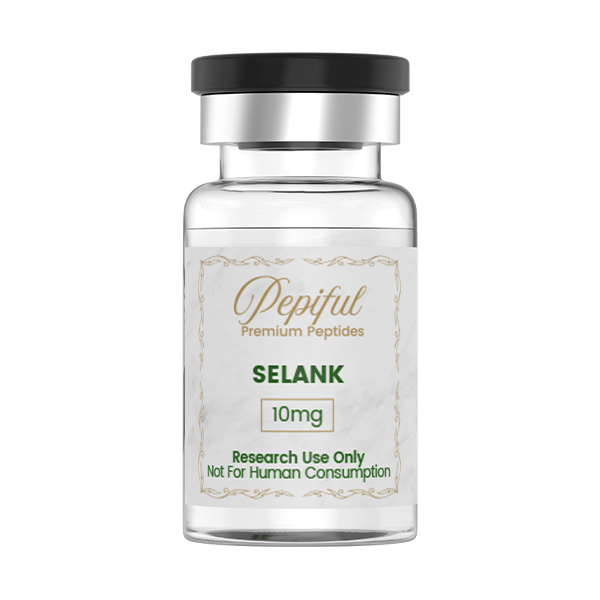
Selank (10mg) — Researcher-Focused Summary
Selank is a synthetic heptapeptide (Thr‑Lys‑Pro‑Arg‑Pro‑Gly‑Pro), modeled on the endogenous tetrapeptide tuftsin, developed with reported anxiolytic, nootropic, and immunomodulatory properties. It has been studied primarily in preclinical models and early clinical trials for anxiety, cognitive impairment, and stress‑related disorders.
Key pharmacologic effects
Neuropsychiatric modulation: Exhibits anxiolytic and anti‑stress effects in animal models, with improvements in conditioned fear, social and exploratory behaviors, and stress resilience.
Cognitive and memory effects: Enhances learning and memory consolidation in rodents in several paradigms; proposed to modulate neurotransmitter systems and neurotrophic signaling.
Immunomodulation: Modulates innate immune responses (e.g., macrophage function) and cytokine profiles, reflecting tuftsin‑like immunoregulatory activity.
Monoamine and neuropeptide interactions: Influences serotonergic, dopaminergic, and GABAergic signaling in preclinical studies; may alter neuropeptide expression related to stress and affect.
Efficacy (preclinical and clinical highlights)
Preclinical behavior: Robust anxiolytic‑like effects across paradigms (elevated plus maze, open field, conditioned tests) without marked sedative or motor impairment; cognitive enhancement reported in passive/active avoidance and spatial memory tasks.
Stress models: Reduces physiological and behavioral markers of acute and chronic stress; facilitates faster recovery of cognitive function after stress exposure.
Clinical data: Small clinical studies and open‑label reports (primarily from Russian research groups) suggest anxiolytic effects comparable to benzodiazepines without sedative side effects and potential improvements in cognitive function; randomized, large‑scale placebo‑controlled trials are limited outside specific cohorts.
Mechanistic considerations
GABAergic/monoaminergic modulation: Evidence of indirect enhancement of GABAergic tone and modulation of serotonin and dopamine neurotransmission; exact receptor interactions remain to be fully defined.
Neurotrophic and synaptic effects: Reports of altered BDNF expression and markers of synaptic plasticity in animal models suggest potential neuroprotective and cognitive‑enhancing mechanisms.
Peptide‑immune‑brain axis: Combines tuftsin‑like immunomodulatory activity with central nervous system effects, implicating neuroimmune signaling in its mechanism of action.
Pharmacokinetics and delivery: Administered intranasally or subcutaneously in studies; intranasal delivery is proposed to enhance central availability, but systemic PK/PD characterization in humans is incomplete.
Safety and tolerability
Short‑term safety: Reported to be well tolerated in available human studies with few adverse events; lacks the sedation, tolerance, and dependence profiles associated with benzodiazepines in reported trials.
Long‑term safety: Insufficient long‑term safety data from large controlled studies; immunomodulatory effects require evaluation for unintended immune consequences in chronic use.
Regulatory and quality considerations: Much of the clinical literature is regionally concentrated; standardized GMP formulations and independent replication are needed for regulatory advancement.
Research gaps and priorities
Robust randomized trials: Large, placebo‑controlled RCTs across anxiety disorders, PTSD, cognitive impairment, and stress‑related syndromes to define efficacy, dosing, and comparative effectiveness.
Mechanistic clarity: Define molecular targets, receptor interactions, and downstream signaling (neurotransmitter systems, neurotrophic pathways, immune mediators) using integrated electrophysiology, imaging, and omics approaches.
PK/PD and CNS delivery: Characterize absorption, bioavailability (intranasal vs parenteral), CNS penetration, half‑life, and dose–response relationships in humans.
Immunologic profiling: Systematically evaluate immune modulation (cytokine panels, immune cell phenotyping) to assess therapeutic potential and safety in populations with immune comorbidities.
Population stratification and biomarkers: Identify predictors of response (neurophysiologic markers, stress‑reactivity profiles, genetic variants) and develop PD biomarkers (EEG, cortisol response, cytokine shifts).
Comparative and combination strategies: Compare with existing anxiolytics and antidepressants for efficacy/tolerability; study combinations with psychotherapy, cognitive training, or other neuromodulatory interventions.
Practical experimental notes
Endpoints: Include validated clinical scales (e.g., HAM‑A, PCL‑5), objective cognitive batteries, stress‑reactivity assays (cortisol, autonomic measures), neuroimaging (fMRI, PET), and EEG for mechanistic readouts.
Dosing and administration: Investigate intranasal delivery parameters for CNS targeting, standardized dosing regimens, and acute vs chronic administration effects; report formulation, purity, and stability.
Study design: Early‑phase studies should combine PK/PD, biomarker, and mechanistic substudies; subsequent efficacy trials require multicenter, randomized designs with adequate power and long‑term follow‑up.
Safety monitoring: Track neuropsychiatric adverse events, immune parameters, and potential tolerance or withdrawal phenomena; include immunological surveillance for chronic dosing.
Conclusion: Selank is a promising peptide with anxiolytic, cognitive, and immunomodulatory properties supported by robust preclinical data and preliminary clinical reports. To advance translational application, priority research includes rigorous randomized clinical trials, detailed PK/PD and CNS‑delivery studies, mechanistic elucidation of neuroimmune interactions, and comprehensive safety profiling with standardized peptide formulations.
Disclaimer: FOR RESEARCH PURPOSES ONLY. NOT FOR HUMAN CONSUMPTION.

Reviews
There are no reviews yet.