
Description
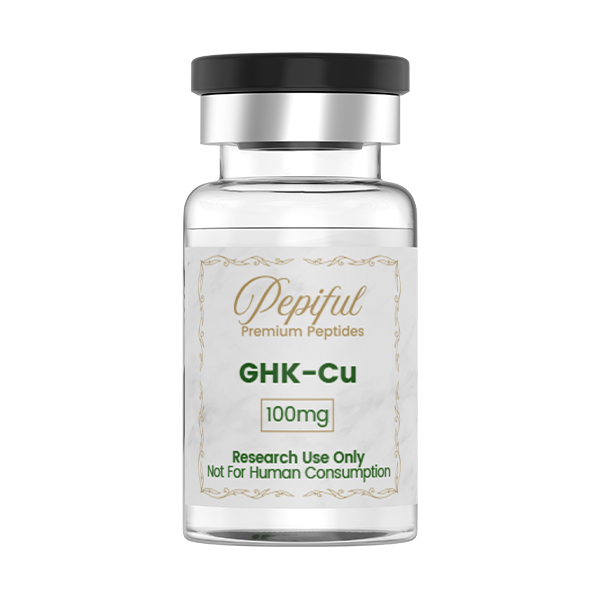
GHK‑Cu (100mg) — Researcher-Focused Summary
GHK‑Cu (glycyl‑L‑histidyl‑L‑lysine copper complex) is a naturally occurring tripeptide–copper complex found in human plasma and tissues that has been implicated in tissue repair, antioxidant defenses, and regulation of gene expression related to extracellular matrix remodeling. It has been explored in dermatology, wound healing, and regenerative medicine contexts.
Key pharmacologic effects
Tissue repair and remodeling: Stimulates collagen, elastin, and proteoglycan synthesis; promotes matrix remodeling and wound closure in preclinical and ex vivo models.
Angiogenesis and granulation: Enhances neovascularization and granulation tissue formation, supporting tissue regeneration.
Anti‑inflammatory and antioxidant actions: Modulates inflammatory cytokines, reduces oxidative stress, and chelates copper to influence redox biology.
Metalloproteinase regulation: Alters matrix metalloproteinase (MMP) and TIMP expression to favor constructive remodeling rather than degenerative breakdown.
Gene expression modulation: Reported to regulate expression of numerous genes involved in cell adhesion, extracellular matrix, and repair pathways in transcriptomic studies.
Efficacy (preclinical and clinical/translational highlights)
Dermal repair and anti‑aging: Topical GHK‑Cu formulations improve skin elasticity, reduce wrinkle depth, and accelerate epidermal repair in clinical and cosmetic studies, with supportive histologic and biochemical endpoints.
Wound healing and ulcers: Accelerated healing observed in animal wound models and some small clinical reports for chronic wounds and ulcers; controlled randomized clinical data remain limited.
Hair growth: Small clinical and preclinical studies indicate potential to stimulate hair follicle activity and hair regrowth via growth factor modulation.
Scar modulation: Demonstrated reduction in hypertrophic scarring and improved scar quality in select models, linked to balanced collagen deposition and MMP/TIMP regulation.
Mechanistic considerations
Copper delivery and signaling: The GHK motif binds copper(II), facilitating localized copper transport that is essential for enzyme cofactors (e.g., lysyl oxidase) and redox signaling relevant to repair processes.
Transcriptional regulator: Transcriptomic analyses suggest GHK‑Cu upregulates genes involved in collagen synthesis, angiogenesis, and antioxidant defenses while downregulating inflammatory and proteolytic pathways.
MMP/TIMP balance: By modulating MMPs and TIMPs, GHK‑Cu promotes matrix remodeling conducive to functional tissue repair rather than chronic degradation.
Cell‑type effects: Demonstrates activity on fibroblasts, keratinocytes, endothelial cells, and hair follicle cells; paracrine signaling likely contributes to observed in vivo effects.
Safety and tolerability
Clinical safety: Topical formulations are generally well tolerated in cosmetic and small clinical studies; local irritation is the most common adverse effect.
Systemic safety: Systemic administration data are limited; copper homeostasis and potential systemic copper overload should be considered if systemic delivery is pursued.
Quality and formulation: Efficacy and tolerability depend on formulation, peptide purity, and stability; oxidation or free copper release can alter activity and safety.
Research gaps and priorities
Robust randomized clinical trials: Larger, controlled RCTs for wound healing, scar prevention, hair regrowth, and dermal anti‑aging to establish efficacy metrics, dose–response, and optimal formulations.
PK/PD and delivery: Characterize percutaneous absorption, tissue retention, local vs systemic copper handling, and optimal vehicle chemistries for target tissues; explore controlled‑release and carrier systems.
Mechanistic depth: Define direct molecular targets, copper‑dependent enzymatic effects, and downstream transcriptional regulators—use integrated proteomic and transcriptomic approaches.
Long‑term safety and systemic use: Assess systemic exposure risks, copper accumulation, and long‑term outcomes for repeated topical or potential systemic administration.
Comparative and combination strategies: Compare GHK‑Cu with other pro‑repair peptides and evaluate synergy with growth factors, stem‑cell therapies, or biomaterial scaffolds for regenerative applications.
Practical experimental notes
Model systems: Employ full‑thickness wound, burn, and chronic ulcer models, as well as ex vivo human skin and organotypic cultures for translational relevance.
Endpoints and biomarkers: Use histology (collagen/elastin quantification), tensile strength, angiogenesis markers (CD31, VEGF), MMP/TIMP profiling, transcriptomics, and functional skin barrier assays.
Formulation reporting: Document vehicle composition, peptide purity, copper stoichiometry, stability data, and packaging to ensure reproducibility.
Dose and administration: For topical studies, report concentration, frequency, and application area; for systemic exploration, conduct rigorous PK, copper balance, and toxicology studies prior to clinical translation.
Conclusion: GHK‑Cu is a biologically active peptide–copper complex with compelling preclinical and early clinical evidence for promoting tissue repair, remodeling, and skin rejuvenation via multifactorial mechanisms including copper delivery, gene regulation, and MMP/TIMP modulation. Priority research pathways include well‑controlled clinical trials, detailed PK/PD and safety characterization, mechanistic studies of copper‑mediated signaling, and optimization of formulation and delivery for translational applications.
Disclaimer: FOR RESEARCH PURPOSES ONLY. NOT FOR HUMAN CONSUMPTION.
Reviews
There are no reviews yet.