
Description
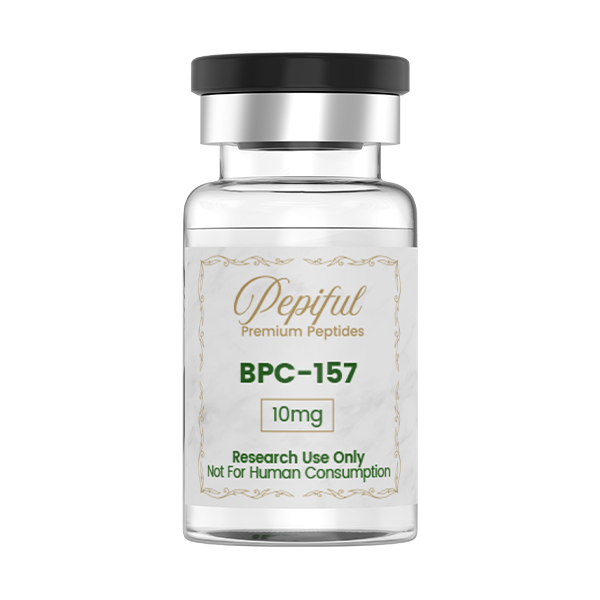
BPC‑157 (10mg) — Researcher-Focused Summary
BPC‑157 (Body Protection Compound‑157) is a 15‑amino‑acid peptide derived from a gastric juice protein. Preclinical literature reports tissue‑protective, pro‑angiogenic, and anti‑inflammatory effects across multiple organ systems; clinical data remain limited and largely exploratory.
Key pharmacologic effects
Cytoprotective and pro‑repair: Promotes wound healing, angiogenesis, and epithelial integrity in preclinical models.
Anti‑inflammatory and anti‑oxidative: Reduces local inflammatory markers and oxidative stress in injured tissues.
Gastroprotective: Demonstrated protection and healing in gastric ulcer models and attenuation of mucosal injury.
Modulation of growth factor signaling: Alters expression of VEGF, FGF, and other repair‑related mediators in animal studies.
Systemic effects in models: Reported benefits in musculoskeletal (tendon, ligament, muscle), neural (nerve injury), hepatic, and gastrointestinal injury models.
Efficacy (preclinical and limited clinical observations)
Robust positive signals in rodent and rabbit models for accelerated tendon/ligament healing, reduced gastric ulceration, enhanced intestinal anastomosis integrity, and improved recovery after various tissue injuries.
Small case series and anecdotal clinical reports suggest symptomatic improvement in soft‑tissue injuries and chronic wounds, but controlled randomized human trials are sparse or absent.
Mechanistic considerations
Angiogenesis and matrix remodeling: Upregulation of pro‑angiogenic factors (e.g., VEGF) and modulation of extracellular matrix components facilitate tissue repair.
Inflammation resolution: Downregulation of pro‑inflammatory cytokines and reduced neutrophil infiltration observed in models.
Neuroprotective actions: Evidence for peripheral nerve regeneration and attenuation of neuropathic pain in animal studies.
Receptor biology unresolved: No definitive single receptor has been universally accepted; cellular targets and downstream signaling cascades require clearer delineation.
Safety and tolerability
Preclinical safety: Animal studies report few overt toxicities at commonly used experimental doses, but systematic toxicology data are limited.
Human safety data: Controlled safety data are minimal; case reports and off‑label clinical use provide insufficient evidence for a comprehensive safety profile.
Regulatory and quality concerns: Many commercially available preparations vary in purity and labeling; lack of standardized GMP‑grade clinical formulations complicates risk assessment.
Research gaps and priorities
Controlled clinical trials: Randomized, placebo‑controlled human studies across indications (musculoskeletal repair, wound healing, GI mucosal protection, neuropathy) are urgently needed.
Dose, route, and PK/PD: Define optimal dosing regimens, routes (systemic vs local vs topical), bioavailability, tissue distribution, and pharmacokinetics in humans.
Mechanistic elucidation: Identify molecular targets, receptor interactions, and downstream signaling responsible for observed pro‑repair effects.
Long‑term safety and off‑target effects: Systematic evaluation of carcinogenicity, immune responses, metabolic effects, and reproductive safety.
Standardization and manufacturing: Development of GMP‑grade formulations, stability data, and validated assays for purity and potency.
Practical experimental notes
Preclinical models: Reproducible effects documented in tendon/ligament transection, gastric ulceration, intestinal anastomosis, muscle injury, and nerve lesion models—use these established paradigms for translational studies.
Biomarkers and endpoints: Consider histologic wound healing scores, angiogenesis markers (VEGF, CD31), inflammatory cytokines, functional recovery assays, pain behavior metrics, and imaging for repair.
Study design: Include dose‑finding, route‑comparison, PK/PD, and mechanistic substudies (transcriptomics, proteomics) with appropriate controls.
Quality control: Use well‑characterized, analytically validated peptide batches; report purity, sequence verification, and storage/stability conditions.
Conclusion: BPC‑157 shows promising, wide‑ranging tissue‑protective and pro‑repair effects in preclinical studies, but robust clinical evidence and mechanistic clarity are lacking. Priorities for the field include rigorous randomized clinical trials, standardized GMP formulations, PK/PD characterization, and identification of molecular targets to translate preclinical promise into validated therapeutic applications.
Disclaimer: FOR RESEARCH PURPOSES ONLY. NOT FOR HUMAN CONSUMPTION.
Reviews
There are no reviews yet.