
Description
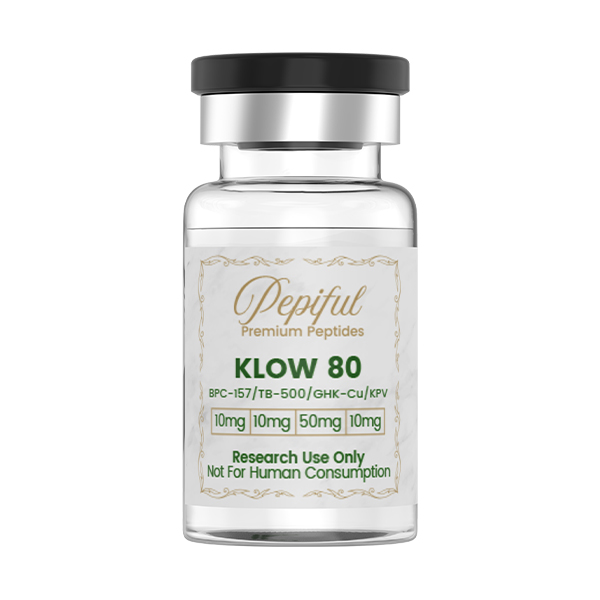
KLOW80 Blend [GHK-Cu (50mg) / KPV (10mg) / BPC-157 (10mg) / TB500 (10mg)] — Researcher‑Focused Summary
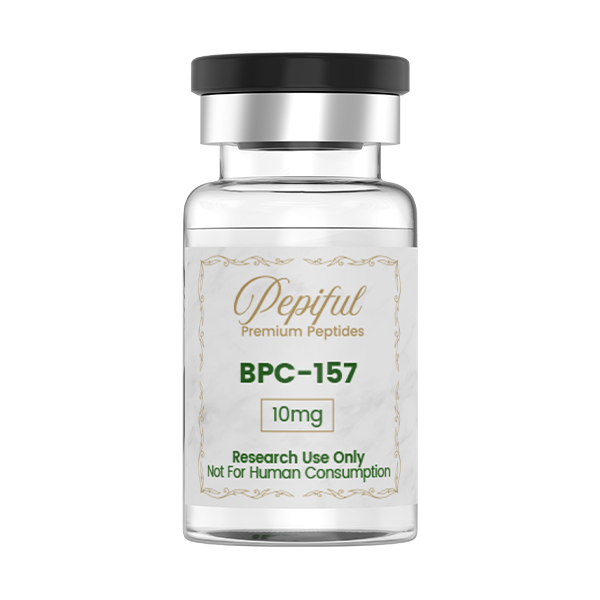
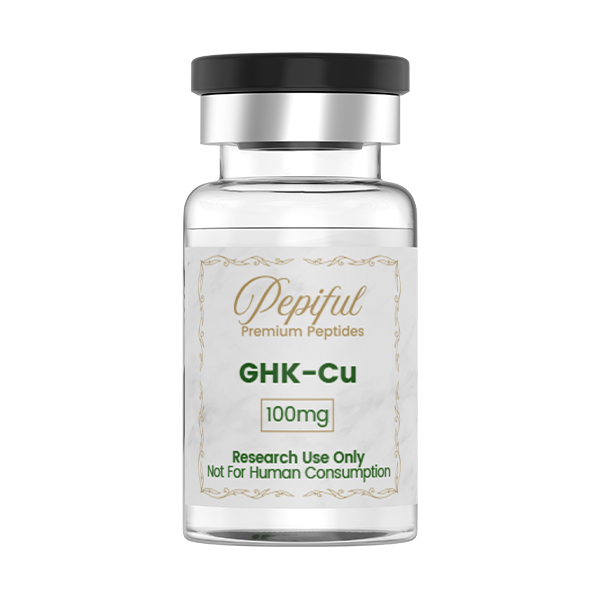
Composition: Proprietary combination of four bioactive peptides—TB‑500 (thymosin β4 fragment), KPV (Lys‑Pro‑Val), BPC‑157 (body protection compound‑157), and GHK‑Cu (glycyl‑histidyl‑lysine copper complex).
Intended use: Designed to promote tissue repair, angiogenesis, anti‑inflammation, and remodeling for musculoskeletal, soft‑tissue, and mucosal injuries; marketed in research/experimental contexts.
Evidence base: Predominantly preclinical studies for individual components; limited and heterogeneous clinical data for single agents and very sparse controlled data on combined formulations.
Key pharmacologic effects
Wound healing and tissue remodeling: Promotes cellular migration, extracellular matrix reorganization, fibroblast and keratinocyte activity, and collagen synthesis—mechanisms represented across components (TB‑500, BPC‑157, GHK‑Cu).
Angiogenesis and perfusion: TB‑500 and BPC‑157 stimulate angiogenic pathways and vascular remodeling; GHK‑Cu modulates copper‑dependent enzymes relevant to neovascularization.
Anti‑inflammatory and immunomodulatory actions: KPV and BPC‑157 exhibit cytokine‑suppressive and mucosal‑protective effects; GHK‑Cu and TB‑500 reduce pro‑inflammatory signaling and oxidative stress in models.
Cytoskeletal and migratory modulation: TB‑500 alters actin dynamics to enhance cell motility and tissue closure.
Matrix metalloproteinase (MMP) and collagen regulation: GHK‑Cu and BPC‑157 influence MMP expression and collagen deposition, balancing breakdown and repair.
Efficacy (preclinical and clinical highlights)
Preclinical wound and tendon models: Consistent acceleration of wound closure, tendon/ligament repair, and muscle regeneration with single‑agent use; improved biomechanical strength and histologic repair reported.
Gastrointestinal and mucosal protection: BPC‑157 and KPV show robust protection and healing in multiple gut injury models (ulceration, colitis, perforation) with reduced inflammation and enhanced epithelial restitution.
Angiogenesis and ischemia models: TB‑500 and BPC‑157 reduce ischemic injury and enhance reperfusion and capillary formation in tissue injury models.
Reconstitution of degraded extracellular matrix: GHK‑Cu promotes collagen synthesis, dermal remodeling, and scar modulation in dermal/dermal‑equivalent models and topical human applications.
Clinical data: Mostly limited to case reports, small open‑label series, compassionate‑use style reports, and topical GHK‑Cu cosmetic/dermatologic studies; randomized, placebo‑controlled trials for the blend or multi‑peptide regimens are lacking.
Mechanistic considerations
Complementary pathway engagement: Components act on overlapping but distinct biological axes—cytoskeletal remodeling (TB‑500), epithelial/mucosal immune modulation (KPV, BPC‑157), matrix remodeling and copper‑dependent enzymology (GHK‑Cu). This provides a biological rationale for combination therapies targeting complex tissue repair.
Pro‑repair growth‑promoting signaling: Upregulation of VEGF, FGF, and other pro‑angiogenic factors, modulation of TGF‑β signaling, and promotion of pro‑survival pathways (reduced apoptosis) are recurrent themes in models.
Immunomodulation without broad immunosuppression: KPV and BPC‑157 reduce pro‑inflammatory cytokines and neutrophil infiltration in animal studies while preserving host defense in many models, though systematic human immune safety data are limited.
Potential for synergistic or antagonistic interactions: Theoretical synergy exists (e.g., enhanced cell migration + angiogenesis + matrix remodeling), but pharmacodynamic interaction studies are absent; combination could also amplify undesired proliferative or angiogenic signals.
Pharmacokinetics and delivery
Routes used experimentally: Subcutaneous and intramuscular injections are common for TB‑500, BPC‑157, and GHK‑Cu in animal and user‑reported human contexts; topical/local delivery and oral formulations (BPC‑157) reported but bioavailability varies. KPV delivery has been explored parenterally and mucosally in models.
PK/PD gaps: Quantitative human pharmacokinetics (absorption, distribution, half‑life, tissue retention, metabolite profiles), dose–response relationships, and optimal temporal sequencing for combination dosing are not well defined.
Formulation stability: Peptide stability, solubility, and excipient effects vary by peptide; standardized GMP formulations with validated stability and sterility data are typically lacking for proprietary blends.
Safety and tolerability
Short‑term tolerability: Reported adverse events in single‑agent human uses are infrequent in small datasets (local injection reactions, transient nausea, headache); systematic safety data for combined administration are absent.
Potential risks: Additive or synergistic pro‑angiogenic or pro‑proliferative effects raise theoretical concerns about excessive neovascularization, aberrant tissue growth, fibrotic responses, or potential tumor promotion in susceptible individuals. Immune perturbation (altered cytokine milieu) could have unintended consequences in chronic dosing.
Quality control risks: Unregulated sourcing raises concerns about peptide purity, contaminants (endotoxin), incorrect sequence, dosing inaccuracies, and microbial sterility—critical for parenteral products.
Long‑term safety: No robust long‑term controlled safety studies exist for the blend; monitoring required for abnormal tissue proliferation, chronic inflammation, autoimmunity, and systemic metabolic effects.
Research gaps and priorities
Combination preclinical pharmacology
Dose‑matrix and temporal sequencing studies to identify additive, synergistic, or antagonistic interactions across repair endpoints (angiogenesis, tensile strength, epithelial closure).
Tissue‑specific distribution and retention studies to inform dosing intervals.
PK/PD characterization
Human PK studies for each peptide and the blend (plasma levels, tissue sampling when feasible, metabolite profiling, half‑life).
PD biomarkers linked to mechanism (VEGF, MMPs, collagen turnover markers, cytokine panels).
Safety and toxicology
GLP toxicology across durations (acute, subchronic, chronic) including carcinogenicity/ proliferative potential assays, reproductive toxicity, and immunotoxicity studies.
Interaction studies with common medications and with wound‑healing modulators (e.g., anti‑angiogenic agents).
Early‑phase clinical evaluation
Phase 1 tolerability/PK trials in healthy volunteers with escalating single and multiple dosing, standardized GMP material, and rigorous sterility/purity verification.
Phase 2 proof‑of‑concept RCTs in well‑defined indications (e.g., tendon repair, chronic non‑healing ulcers, surgical wound augmentation) with objective functional, histologic, and imaging endpoints.
Biomarker‑driven endpoints and imaging
Use Doppler/contrast imaging, MRI, histomorphometry, and circulating biomarkers (VEGF, collagen propeptides, MMP activity) to quantify repair processes.
Incorporate safety biomarkers for uncontrolled angiogenesis or fibrosis.
Manufacturing and regulatory strategy
Establish GMP production, validated assays for identity/purity/potency, endotoxin limits, and stability data; define regulatory pathway given multi‑agent composition.
Practical experimental notes
Endpoints: Primary (tensile strength, time‑to‑wound‑closure, ulcer area reduction, functional recovery scales); secondary (angiogenesis indices, collagen organization, pain, quality of life).
Dosing and administration: Evaluate single‑agent vs combination arms, vary dose ratios, and test both local (peri‑lesional) and systemic (subcutaneous) routes; report excipients, concentration, vial stability, and storage.
Study design: Preclinical: randomized, blinded animal studies with standardized injury models and histologic/time‑course endpoints. Clinical: randomized, double‑blind, placebo‑controlled trials for priority indications, with prespecified safety stopping rules.
PK/PD sampling: Serial plasma, wound exudate or tissue biopsy when ethical/feasible, and biomarker panels (inflammatory cytokines, VEGF, MMPs, collagen turnover markers).
Safety monitoring: Regular imaging to detect abnormal neovascularization, tumor surveillance where indicated, hematology/ chemistry, immunophenotyping, and infection surveillance.
Statistical considerations: Define minimally important clinical differences for repair outcomes, power for detecting combination benefits over single agents, and interim analyses for safety.
Conclusion
Biological rationale: KLOW blend combines peptides with complementary pro‑repair, angiogenic, and anti‑inflammatory activities that plausibly address complex tissue healing processes.
Evidence status: Strong preclinical support for individual peptides; empirical data on the specific blend are lacking. Rigorous PK/PD, toxicology, and controlled clinical trials are required to determine efficacy, safety, optimal dosing/sequence, and regulatory viability.
Priority next steps: GMP manufacturing and identity/purity validation, GLP safety studies, human PK/tolerability trials, and indication‑focused randomized proof‑of‑concept studies using robust mechanistic biomarkers.
Disclaimer: FOR RESEARCH PURPOSES ONLY. NOT FOR HUMAN CONSUMPTION.
Reviews
There are no reviews yet.