
Description
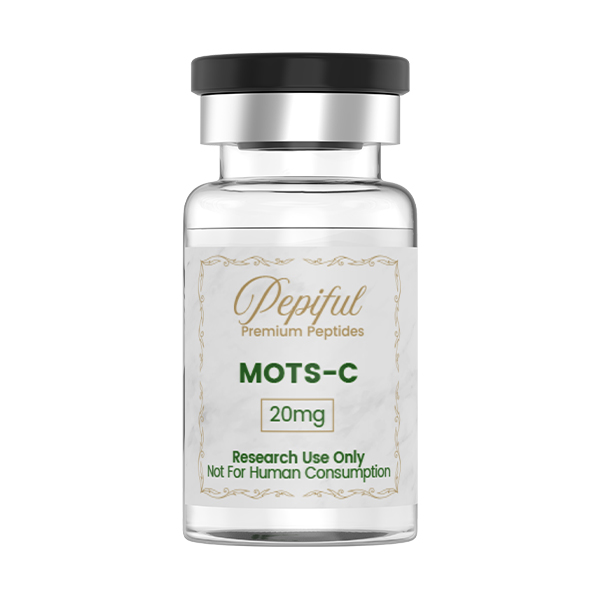
MOTS‑c (20mg) — Researcher-Focused Summary
MOTS‑c (mitochondrial open reading frame of the 12S rRNA‑c) is a 16‑amino‑acid mitochondrial‑derived peptide (MDP) encoded within the mitochondrial 12S rRNA. Identified as a mitokine, MOTS‑c links mitochondrial function to systemic metabolic regulation and stress responses.
Key pharmacologic effects
Metabolic regulation: Enhances insulin sensitivity, improves glucose uptake, and modulates lipid metabolism in preclinical models.
Mitochondrial bioenergetics: Promotes mitochondrial respiration efficiency and ATP production while reducing reactive oxygen species (ROS) under stress conditions.
AMPK activation and stress signaling: Activates AMPK and other energy‑sensing pathways, leading to enhanced fatty‑acid oxidation, glucose homeostasis, and metabolic resilience.
Exercise‑mimetic effects: Recapitulates aspects of exercise physiology (improved endurance, metabolic flexibility) in animal studies.
Anti‑inflammatory and cytoprotective actions: Reduces inflammatory markers and protects tissues from metabolic and oxidative insults.
Efficacy (preclinical and early translational highlights)
Metabolic disease models: MOTS‑c administration improves glycemic control, reduces weight gain on high‑fat diets, and ameliorates insulin resistance in rodent models.
Aging and functional decline: Preclinical studies report improvements in physical performance, muscle function, and metabolic markers in aged animals.
Tissue protection: Demonstrated protective effects in models of ischemia/reperfusion, metabolic stress, and sepsis‑related dysfunction.
Human observational data: Correlative studies link circulating MOTS‑c levels with metabolic health, age, and disease states, but interventional human trials are limited.
Mechanistic considerations
Nuclear‑mitochondrial signaling: MOTS‑c translocates to the nucleus under metabolic stress in some models, modulating nuclear gene expression to promote adaptive responses.
AMPK‑centric effects: Activation of AMPK appears central to MOTS‑c’s metabolic benefits, enhancing glucose uptake and fatty‑acid oxidation via downstream effectors (PGC‑1α, GLUT4 translocation).
Metabolite and redox modulation: MOTS‑c influences one‑carbon metabolism, NAD+/NADH balance, and cellular redox state, contributing to its bioenergetic effects.
Exercise/adaptive physiology overlap: Overlapping transcriptional programs with exercise and caloric‑restriction pathways suggest MOTS‑c acts as an endogenous mediator of systemic metabolic adaptation.
Safety and tolerability
Preclinical safety: Animal studies generally report favorable tolerability across tested doses with no consistent major toxicities, but formal toxicology packages are limited.
Human safety data: Interventional human data are sparse; controlled dosing, PK/PD, and safety trials are needed to establish clinical tolerability and dose ranges.
Immunogenicity and off‑target effects: Potential for immune responses or unintended metabolic perturbations requires evaluation in longer‑duration studies.
Research gaps and priorities
Human interventional trials: Phase 1/2 studies to define safety, tolerability, PK/PD, and preliminary efficacy in metabolic syndrome, insulin resistance, sarcopenia, and age‑related decline.
Dose, route, and formulation: Optimize systemic delivery (peptide stability, half‑life extension, targeted delivery) and determine effective exposure profiles.
Mechanistic mapping: Elucidate nuclear translocation mechanisms, direct molecular targets, and downstream transcriptional networks; clarify species‑specific effects.
Biomarkers & translational endpoints: Develop robust PD biomarkers (AMPK activation, glucose flux assays, metabolomics signatures) and standardized assays for circulating MOTS‑c quantification.
Long‑term safety and aging effects: Assess chronic administration effects on metabolism, mitochondrial function, cancer risk, and reproductive safety in appropriate models.
Interaction with lifestyle interventions: Investigate interaction with exercise, diet, and NAD+/sirtuin‑targeted therapies to define additive or synergistic effects.
Practical experimental notes
Model selection: Use diet‑induced obesity, aged, and muscle‑injury models to examine metabolic, functional, and regenerative endpoints; include both sexes and multiple age cohorts.
Outcome measures: Include insulin sensitivity (clamp studies where feasible), glucose tolerance, energy‑expenditure (indirect calorimetry), mitochondrial respiration (respirometry), muscle performance, metabolomics, and transcriptomics.
PK/PD and assay development: Characterize peptide stability, tissue distribution, and half‑life; validate sensitive LC‑MS/MS or immunoassays for MOTS‑c detection.
Mechanistic substudies: Incorporate nuclear localization assays, chromatin/transcriptome profiling, AMPK pathway interrogation, and targeted metabolite flux analyses.
GMP and quality control: Use well‑characterized, analytically verified peptide preparations with stability and purity documentation for translational work.
Conclusion: MOTS‑c is a promising mitochondrial‑derived peptide that links cellular energetics to systemic metabolic adaptation, with compelling preclinical evidence for improving insulin sensitivity, mitochondrial function, and exercise‑like benefits. Priority research includes rigorous human dosing and safety trials, mechanistic elucidation of nuclear‑mitochondrial signaling, biomarker development, and optimization of delivery strategies to translate MOTS‑c biology into therapeutic applications.
Disclaimer: FOR RESEARCH PURPOSES ONLY. NOT FOR HUMAN CONSUMPTION.





Reviews
There are no reviews yet.