
Description
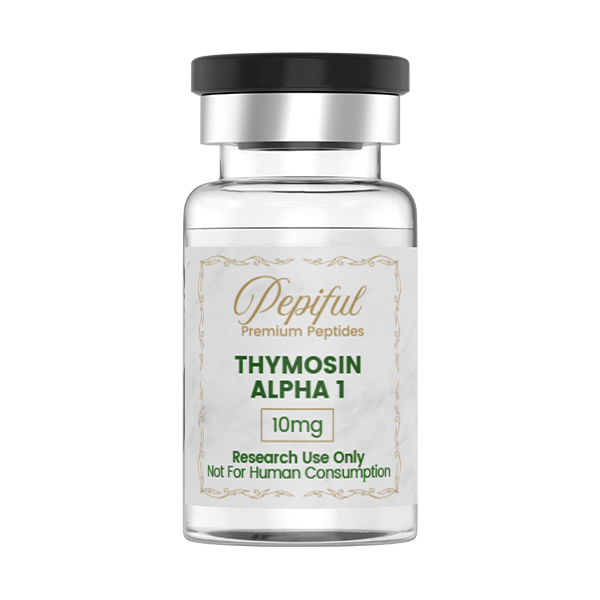
Thymosin Alpha‑1 (TA1) (10mg) — Researcher-Focused Summary
Thymosin alpha‑1 (TA1, also thymalfasin) is a 28‑amino‑acid peptide originally isolated from thymic tissue with immunomodulatory properties. It has been investigated as an immune‑stimulatory and immunorestorative agent in infectious disease, oncology, and immune‑deficiency contexts.
Key pharmacologic effects
Immune modulation: Enhances innate and adaptive immune responses via increased T‑cell function, dendritic cell maturation, and natural killer (NK) cell activity.
Cytokine regulation: Modulates cytokine milieu—upregulates Th1‑type responses (e.g., IFN‑γ) and can reduce pathological inflammation in certain settings.
Immune restoration: Promotes recovery of lymphocyte numbers and function following immunosuppression or chronic infection.
Adjuvant activity: Potentiates vaccine responses and improves antigen presentation in preclinical and clinical studies.
Efficacy (clinical and translational highlights)
Infectious disease: Clinical data support TA1 use as adjunctive therapy in chronic viral infections (e.g., hepatitis B/C in older studies) and as a potential immune enhancer in acute severe infections; evidence quality varies by indication.
Oncology: Investigated as an immunomodulatory adjunct to chemotherapy, targeted therapy, and immunotherapy to reduce infection risk, improve immune competence, and potentially augment anti‑tumor immunity in select cancers.
Sepsis and critical illness: Exploratory studies suggest TA1 may restore immune function in immunoparalyzed patients, but robust randomized data are limited.
Vaccine adjuvant: TA1 demonstrated enhanced seroconversion and T‑cell responses in some vaccine trials, particularly in immunocompromised cohorts.
Mechanistic considerations
T‑cell modulation: TA1 promotes T‑cell differentiation, maturation, and function—enhancing CD4+/CD8+ responses and restoring thymic output markers in some models.
Dendritic cell and antigen presentation: Enhances dendritic cell maturation and MHC expression, improving antigen presentation and downstream adaptive responses.
Innate immunity: Increases NK cell cytotoxicity and modulates macrophage activity, contributing to early pathogen control.
Immune homeostasis: TA1’s dual ability to enhance pathogen‑targeted immunity while modulating excessive inflammation suggests context‑dependent immunoregulatory effects; precise signaling pathways (TLR modulation, MyD88/NF‑κB interactions) are areas of active investigation.
Safety and tolerability
Clinical safety: Generally well tolerated in multiple clinical studies; adverse events are typically mild (injection‑site reactions, transient flu‑like symptoms).
Immunologic risks: Theoretical risk of precipitating autoimmunity has not been a major signal in trials but warrants monitoring in predisposed patients.
Drug interactions: Often studied as adjunctive therapy; interactions with other immunomodulators, checkpoint inhibitors, or immunosuppressants require careful evaluation.
Research gaps and priorities
High‑quality randomized trials: Definitive RCTs across prioritized indications (severe infections, cancer adjunctive therapy, sepsis immunorestoration) are needed to establish efficacy and optimal use‑cases.
Mechanistic depth: Elucidate molecular targets and signaling cascades (e.g., TLRs, cytokine networks, thymic regeneration pathways) that mediate TA1’s context‑dependent effects.
Biomarkers of response: Identify immune phenotypes (lymphocyte subsets, functional assays, transcriptomic signatures) that predict benefit and guide patient selection.
Dosing and scheduling: Optimize dose, route (subcutaneous vs intramuscular), and duration for acute vs chronic indications and for combination regimens with vaccines or oncologic therapies.
Long‑term safety: Systematic monitoring for autoimmunity, immune dysregulation, and interactions with chronic immunotherapies.
Practical experimental notes
Study endpoints: Include immunologic readouts (T‑cell proliferation, cytokine profiles, NK cytotoxicity), clinical endpoints (infection rates, viral load, tumor response), and safety biomarkers.
Patient populations: Prioritize immunocompromised cohorts, patients with immune exhaustion/paralysis (e.g., sepsis, chronic viral infection), and oncology patients receiving immunosuppressive treatments.
Combination studies: Design trials combining TA1 with vaccines, checkpoint inhibitors, antivirals, or antimicrobial regimens with mechanistic substudies to assess synergy and immune modulation.
PK/PD and formulation: Characterize pharmacokinetics, tissue distribution, and PD markers; ensure GMP‑grade peptide sourcing and stability data.
Conclusion: Thymosin alpha‑1 is a clinically advanced immunomodulatory peptide with potential to restore and modulate immune function across infectious, oncologic, and critical‑illness settings. Priority research should focus on rigorous randomized trials, mechanistic elucidation, biomarker development for patient selection, and optimization of combination strategies to define its role in contemporary immune therapeutics.
Disclaimer: FOR RESEARCH PURPOSES ONLY. NOT FOR HUMAN CONSUMPTION.

Reviews
There are no reviews yet.