
Description
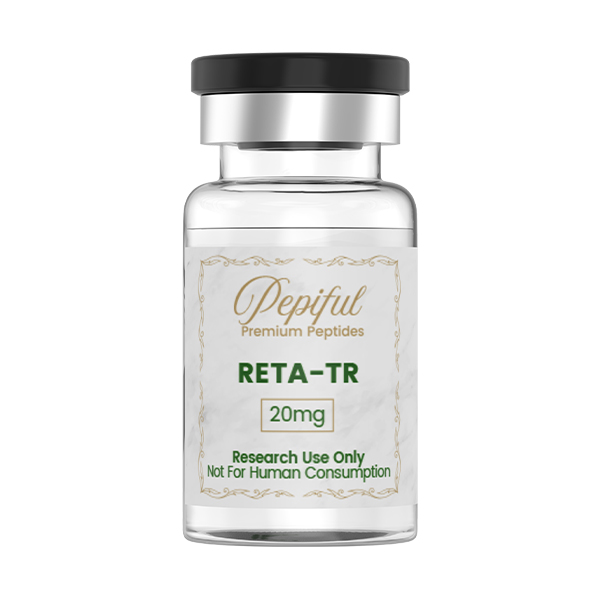
RETA-TR (Retatrutide 20mg) — Researcher-Focused Summary
Retatrutide (also known as LY‑3437943 in some publications) is a multi‑agonist peptide engineered to activate GLP‑1, GIP, and glucagon receptors within a single molecule, designed to produce synergistic effects on glycemic control, weight loss, and energy expenditure.
Key pharmacologic effects
Triple agonism (GLP‑1/GIP/glucagon) combines insulinotropic and glucagon‑suppressing effects with appetite suppression and potential increases in energy expenditure.
Long‑acting pharmacokinetic design supports sustained receptor engagement with intermittent dosing (clinical programs use once‑weekly regimens).
Efficacy (clinical trial highlights)
Weight loss: Phase 2 data demonstrated profound, dose‑dependent mean body‑weight reductions exceeding those reported for GLP‑1 monoagonists and comparators, supporting potent anorectic and metabolic effects.
Glycemic control: Significant reductions in HbA1c and fasting glucose observed in participants with type 2 diabetes and in non‑diabetic obesity cohorts.
Metabolic biomarkers: Early studies report improvements in lipids, waist circumference, and liver enzyme markers; effects on NAFLD/NASH biomarkers are under active investigation.
Mechanistic considerations
Synergy hypothesis: GLP‑1 provides anorectic and insulinotropic action, GIP may augment insulin secretion and modulate adipose response, and glucagon activity can increase energy expenditure and promote lipid mobilization—together producing amplified metabolic benefit.
Energy‑expenditure contribution: Glucagon receptor agonism is hypothesized to raise resting energy expenditure and augment weight‑loss magnitude; balance with glycemic effects requires precise receptor biasing.
Receptor signaling bias and tissue specificity: Differential receptor expression across pancreas, CNS, liver, and adipose tissue and engineered agonist bias likely shape therapeutic profile; detailed signaling pathway mapping is an important research priority.
Safety and tolerability
Adverse events: Predominantly gastrointestinal (nausea, vomiting, diarrhea), generally dose‑related and mitigated by gradual up‑titration.
Hyperglycemia risk: Glucagon receptor activity can acutely raise glucose; co‑agonism with GLP‑1/GIP is intended to balance glycemic control, but careful monitoring is required, especially in vulnerable populations.
Cardiometabolic safety: Cardiovascular and hepatic safety are under active evaluation; large‑scale outcome data and longer‑term safety surveillance are needed.
Other considerations: Potential for gallbladder events, pancreatitis signals, and rare adverse events warrants systematic monitoring.
Clinical development and indications
Clinical status: Advanced phase clinical trials have reported robust weight‑loss and glycemic efficacy; programs are evaluating retatrutide for obesity and type 2 diabetes with mechanistic substudies.
Investigational scope: Trials include assessments of metabolic, hepatic (NAFLD/NASH), and cardiometabolic endpoints, with mechanistic biomarker panels and body‑composition measures.
Research gaps and priorities
Mechanistic deconvolution: Disentangle relative contributions of GLP‑1, GIP, and glucagon signaling to weight loss, energy expenditure, and glycemic control; define tissue‑specific effects.
Glycemic balance: Elucidate how glucagon agonism’s catabolic effects are counterbalanced by incretin activity across doses and patient phenotypes.
Durability and adaptive responses: Assess long‑term maintenance of weight loss, compensatory metabolic adaptations, and receptor desensitization dynamics.
Safety phenotyping: Large, long‑duration studies to evaluate cardiovascular outcomes, hepatic safety (including NASH histology where feasible), pancreatobiliary events, and reproductive safety.
Biomarkers & precision medicine: Identify predictors of efficacy and adverse responses (genomic, metabolic, microbiome, imaging) to enable patient stratification and dose optimization.
Practical experimental notes
Dosing and titration: Clinical protocols employ stepwise up‑titration to target doses to reduce GI adverse effects; pharmacokinetic/pharmacodynamic (PK/PD) modeling informs dose selection.
Outcome measures: Include body weight, HbA1c, fasting glucose, insulin sensitivity indices, resting energy expenditure, body composition (DXA), liver enzymes and imaging, lipid panels, and patient‑reported outcomes.
Mechanistic substudies: Incorporate metabolic flux assays, adipose and liver biopsies when ethical/feasible, neuroimaging for appetite circuits, and integrated omics to map response pathways.
Safety monitoring: Standardized protocols for monitoring glycemia, pancreatitis markers, gallbladder events, and cardiovascular parameters recommended.
Conclusion: Retatrutide represents a next‑generation multi‑agonist peptide approach that leverages GLP‑1, GIP, and glucagon pathways to achieve potent metabolic effects. Critical research priorities include mechanistic clarification of multi‑receptor synergy, long‑term efficacy and safety profiling, and development of biomarkers to guide precision application in metabolic disease.
Disclaimer: FOR RESEARCH PURPOSES ONLY. NOT FOR HUMAN CONSUMPTION.





Reviews
There are no reviews yet.