
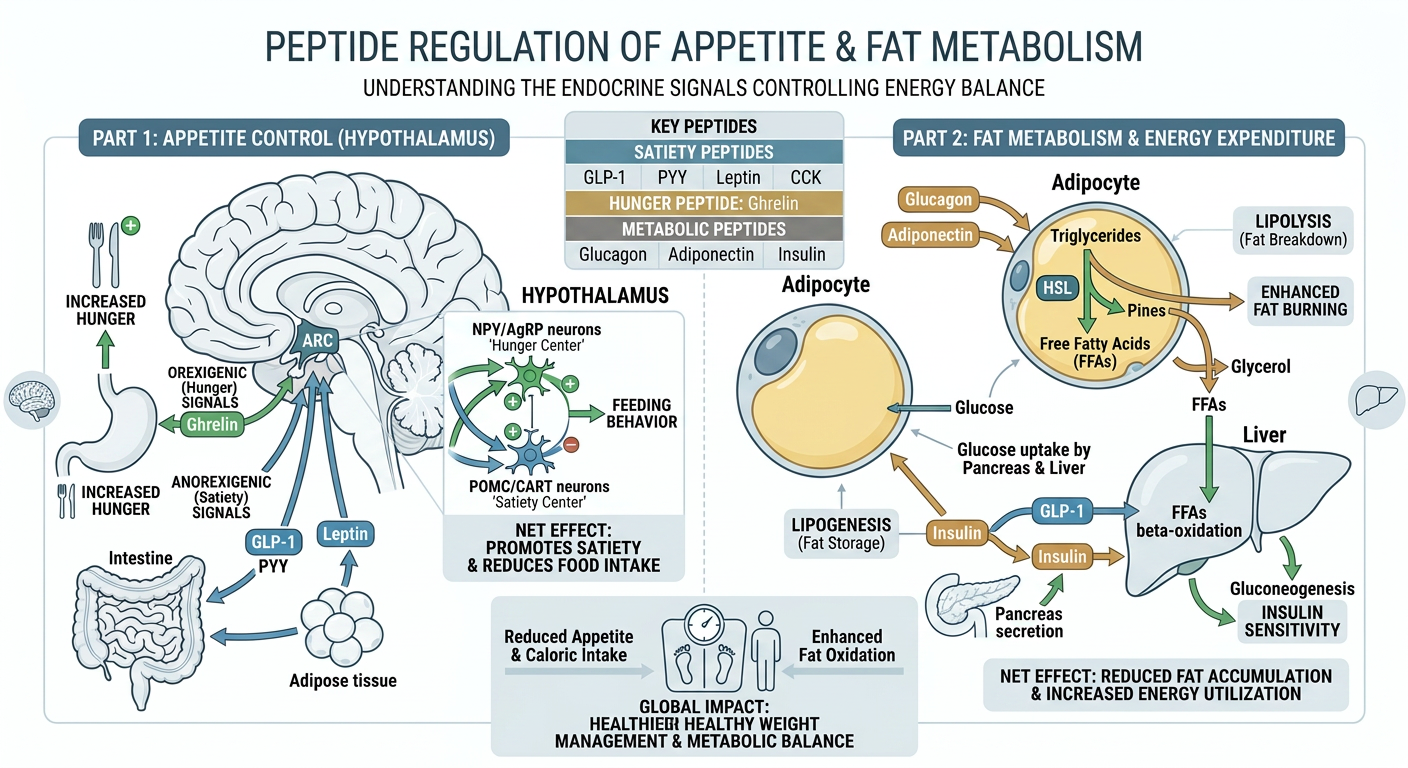
Metabolic dysfunction underlies obesity, type 2 diabetes, fatty liver, and many age‑related conditions. Recent advances in peptide science are delivering targeted therapies that improve insulin sensitivity, regulate appetite, enhance mitochondrial function, and reduce metabolic inflammation—offering new ways to restore healthy metabolism.
How peptide therapies act on metabolism
- Hormone mimicry: Synthetic peptides can mimic or modulate metabolic hormones (e.g., incretins) to improve glucose control and appetite regulation.
- Receptor targeting: Peptides precisely activate or block receptors involved in energy balance, lipid handling, and insulin signaling.
- Mitochondrial support: Mitochondria‑targeted peptides improve cellular energy production and reduce oxidative stress.
- Anti‑inflammatory modulation: Peptides that lower chronic metabolic inflammation restore signaling pathways disrupted in insulin resistance.
Notable breakthroughs and examples
- GLP‑1 receptor agonists (peptide hormones) evolved into highly effective metabolic drugs that lower blood glucose and body weight—fueling interest in dual- and tri-agonist peptides that combine GLP‑1, GIP, and glucagon activities to produce stronger metabolic benefits.
- Dual- and multi‑agonist peptides are showing greater weight loss and glycemic control than single‑target agents in clinical trials by engaging complementary pathways for appetite suppression, energy expenditure, and glucose regulation.
- Mitochondria‑directed peptides (designed to stabilize membranes and reduce reactive oxygen species) have demonstrated improved cellular respiration and metabolic resilience in preclinical and early clinical studies.
- Peptides that enhance adipose tissue browning and increase thermogenesis are being developed to raise energy expenditure and improve lipid metabolism.
- Anti‑inflammatory and senotherapeutic peptides target immune and senescent cell pathways in metabolic tissues, reducing chronic inflammation that drives insulin resistance.
Clinical and translational progress
- Several peptide therapeutics for metabolic disease have reached advanced clinical stages, with robust effects on HbA1c, weight, and cardiometabolic risk markers.
- Combination peptide modalities (e.g., GLP‑1/GIP/glucagon tri-agonists) are a major translational focus and show promise for treating obesity and type 2 diabetes more effectively than existing single‑agent treatments.
- Improved formulation and delivery (long‑acting injectables, sustained‑release platforms) have extended peptide activity, reducing dosing frequency and improving adherence.
Advantages of peptide-based metabolic therapies
- High specificity reduces off-target adverse effects.
- Rapid development timeline compared with large biologics.
- Modular design enables combining activities in one molecule to produce synergistic metabolic effects.
Challenges and considerations
- Long-term safety and durability of weight and metabolic benefits need continued study.
- Cost and access remain barriers as advanced peptide therapies can be expensive.
- Oral delivery remains limited for many peptides; most current agents require injection.
- Real-world effectiveness depends on integration with lifestyle, behavioral, and clinical care.
Practical implications for patients and clinicians
- Peptide-based metabolic drugs are reshaping treatment algorithms for type 2 diabetes and obesity—clinicians should stay current on indications, efficacy data, and safety profiles.
- Patients should discuss risks, benefits, and realistic expectations with healthcare providers; lifestyle interventions remain foundational and synergistic with peptide therapies.
Outlook
Peptide therapeutics represent a major breakthrough in repairing metabolic dysfunction by combining targeted hormone modulation, mitochondrial support, and anti‑inflammatory actions. Ongoing trials of multi‑agonist peptides, improved delivery systems, and deeper understanding of metabolic biology suggest peptides will play an increasingly central role in preventing and treating metabolic disease.
Posted on: May 4, 2026
Categories: Metabolism, Therapeutics, Biotechnology
Tags: peptides, metabolism, GLP-1, multi-agonist, mitochondrial peptides





Leave a Reply