
Description
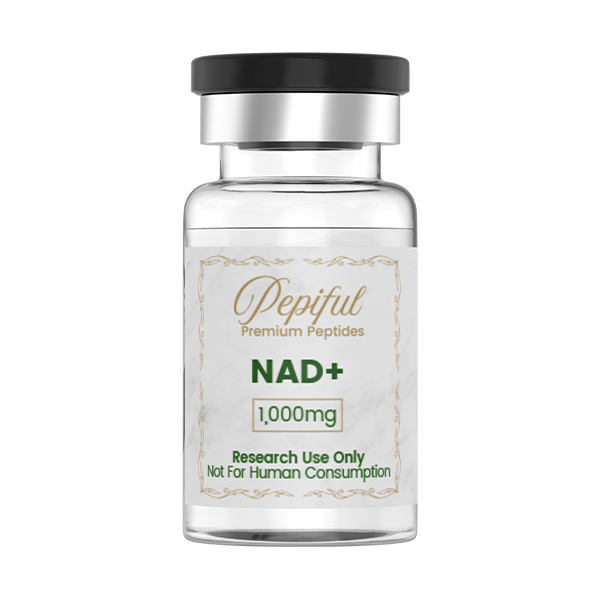
NAD+ (1,000mg) — Researcher-Focused Summary
Nicotinamide adenine dinucleotide (NAD+) is a central redox cofactor and substrate for multiple enzyme families (sirtuins, PARPs, CD38/157) that regulate metabolism, DNA repair, epigenetics, and cellular stress responses. NAD+ levels decline with age and in metabolic and inflammatory diseases, prompting interest in NAD+ restoration strategies (precursors, biosynthesis modulation, and enzyme inhibition) as therapeutic approaches.
Key biochemical and cellular effects
Redox metabolism: NAD+/NADH ratio controls oxidative phosphorylation, glycolysis, and key dehydrogenase reactions, affecting cellular energy homeostasis.
Sirtuin activation: NAD+ is an essential substrate for sirtuin deacylases (SIRT1–7), linking NAD+ availability to mitochondrial biogenesis, metabolic gene programs, and stress resilience.
DNA repair and genomic stability: PARP enzymes consume NAD+ during ADP‑ribosylation in DNA damage responses; NAD+ availability influences repair capacity and genomic maintenance.
Immunometabolism and inflammation: NAD+ modulates inflammatory signaling and immune cell metabolism via sirtuins and NAD‑consuming ectoenzymes (CD38), affecting inflammaging and immunosenescence.
Circadian and epigenetic regulation: NAD+ oscillations interface with circadian regulators (CLOCK/BMAL1) and influence epigenetic states through sirtuin‑dependent histone deacetylation.
Therapeutic and translational strategies
NAD+ precursors: Nicotinamide riboside (NR), nicotinamide mononucleotide (NMN), and nicotinic acid are used to boost NAD+ biosynthesis via salvage and Preiss‑Handler pathways; clinical studies assess safety, PK, and metabolic endpoints.
Enzyme modulation: Inhibitors of NAD+ consumers (e.g., CD38 inhibitors) or activation of biosynthetic enzymes (NAMPT modulation) are being explored to preserve intracellular NAD+ pools.
Combination and targeted approaches: Co‑therapies (precursors + CD38 inhibition), tissue‑targeted delivery, and modulation of NAD+ compartmentalization (mitochondrial vs nuclear) are active areas of investigation.
Preclinical and clinical evidence highlights
Metabolic function: Preclinical models show NAD+ boosting improves mitochondrial function, insulin sensitivity, and metabolic flexibility; early human trials report improved surrogate metabolic measures and increased circulating NAD+ metabolites.
Age‑related phenotypes: NAD+ restoration ameliorates age‑related decline in rodent models (mitochondrial function, muscle performance, cognition); human data are preliminary and heterogeneous.
Inflammation and immune health: NAD+ augmentation can modulate inflammatory cytokine profiles and improve aspects of immune cell function in preclinical settings; translational evidence is emerging.
DNA repair and neuroprotection: NAD+ enhancement supports PARP‑dependent repair and may protect against neurodegeneration in animal models; clinical neuroprotective efficacy remains to be established.
Safety/tolerability: Short‑term precursor supplementation (NR, NMN) is generally well tolerated in early trials; long‑term safety, effects on tumorigenesis, and interactions with cancer therapies require systematic evaluation.
Mechanistic considerations
Compartmentalization: NAD+ exists in nuclear, cytosolic, and mitochondrial pools with distinct biosynthetic and consumption pathways; effective interventions may require targeted modulation of specific compartments.
Flux vs steady state: Therapeutic effects relate to dynamic NAD+ flux and turnover (biosynthesis and consumption) rather than absolute steady‑state levels alone; PK/PD modeling is essential.
Enzyme network interactions: Upregulation of NAD+ consumers (e.g., CD38) in aging can blunt precursor efficacy; understanding regulatory networks is critical for durable NAD+ restoration.
Dose–response and feedback: High precursor dosing can affect nicotinamide pools and feedback‑inhibit salvage pathways; balanced strategies and biomarker monitoring are needed.
Research gaps and priorities
Clinical efficacy endpoints: Well‑powered RCTs with hard clinical outcomes (metabolic disease progression, physical function, cognitive endpoints, infection outcomes) are needed beyond biomarker studies.
Long‑term safety: Systematic evaluation of cancer risk modulation, effects on immune surveillance, metabolic side effects, and reproductive safety with chronic NAD+ augmentation.
Biomarkers and PD assays: Standardized assays for compartmental NAD+ pools, NAD+ turnover (isotope tracing), and downstream activity (sirtuin, PARP activity) to guide dosing and predict response.
Targeted delivery: Strategies to selectively increase mitochondrial or nuclear NAD+ pools (prodrugs, organelle‑targeted formulations) and assessment of tissue‑specific benefits.
Combination therapies: Rational combinations (precursors with CD38 inhibitors, sirtuin activators, exercise, caloric‑restriction mimetics) and their synergistic potential warrant clinical testing.
Individual variability: Genetic, age‑related, microbiome, and comorbidity factors affecting NAD+ metabolism and precursor pharmacology should inform precision approaches.
Practical experimental notes
Study design: Incorporate isotope tracer studies to quantify NAD+ synthesis and consumption fluxes, tissue biopsies when feasible, and integrated multi‑omics (metabolomics, transcriptomics, proteomics) for mechanistic insight.
Endpoints: Use functional endpoints (exercise capacity, insulin sensitivity clamps, cognitive testing), tissue‑specific biomarkers, and safety surveillance (oncologic markers, immune profiling).
PK/PD: Characterize absorption, conversion efficiency (e.g., NR→NMN→NAD+), dose linearity, and effects of co‑medications (e.g., PARP inhibitors) on NAD+ metabolism.
Formulation and quality: Use pharmaceutically characterized precursors and document stability, purity, and batch analytics; for novel modalities (CD38 inhibitors, targeted prodrugs), conduct full preclinical toxicology.
Conclusion: NAD+ is a central metabolic node linking energy metabolism, DNA repair, and cellular stress responses. Therapeutic restoration of NAD+ pools holds broad translational promise for metabolic, age‑related, and degenerative conditions, but rigorous clinical trials, compartment‑specific strategies, biomarker development, and long‑term safety evaluation are essential to translate preclinical promise into validated clinical interventions.
Disclaimer: FOR RESEARCH PURPOSES ONLY. NOT FOR HUMAN CONSUMPTION.
Reviews
There are no reviews yet.